
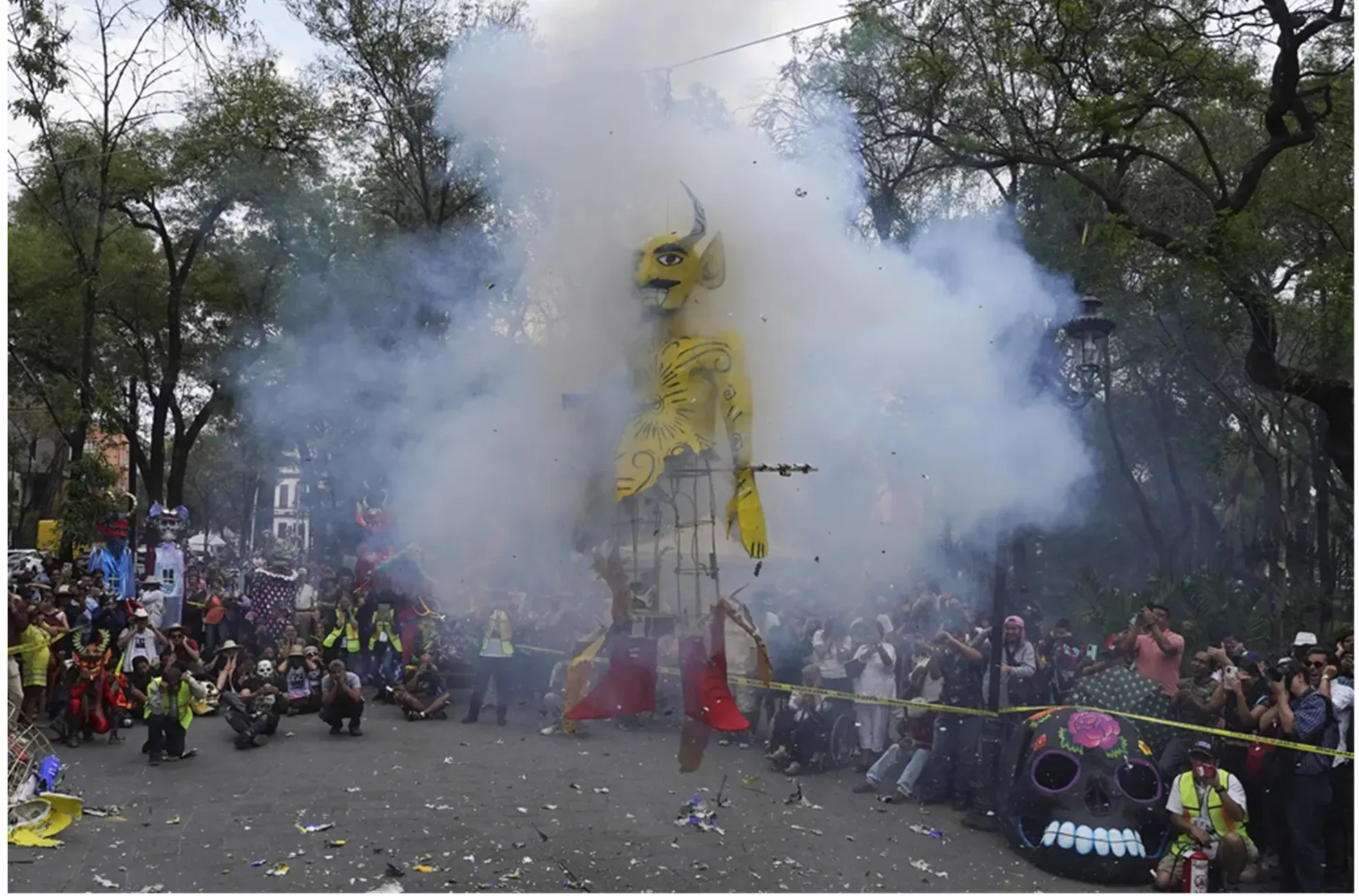
Ok you may have noticed from some of my earlier writings that I was really impressed with this idea happening in the spanish speaking world of making paper mache figures and turning them into a fireworks display, after having witnessed WPA member Juan Galvan effort at Do-it last year. Well Juan is even more into it and has attended several “Judas festivals” in Mexico, where effigies are made and usually destroyed through the employment of energetic materials. I say usually because sometimes the effigies are judged too well done to destroy and they go to a museum instead. He told me they used to be widespread but were constrained somewhat due to “safety reasons”. Fireworks safety and Mexico may seem like an oxymoron to those who have attended the Tultapec festival and lived to tell the tale. And yet Juan says this was the reason given to put a lid on the Judas festival being held all over Mexico as it had been in the past. More plausible explanation, some of the ‘Judas’ were being made to resemble certain politicians, as mentioned in the AP story below..
For some background we turn to articles written in the AP by their writer Maria Theresa Sanchez in April of 2023:
MEXICO CITY (AP) — Evil men beware! If Mexicans find out about your misdeeds, they might caricature you into paper mache figures and blow you to pieces.
The traditional “burning of Judas” is lit in Mexico every Holy Saturday, when people from all over the country gather in neighborhoods to destroy cardboard figures made by local artisans that represent evil characters. The celebration takes place outside of the Catholic Church's Holy Week celebrations and is usually filled with good humor.
Researcher Abraham Dominguez explains in an article in the magazine of the National Institute of Anthropology and History that this ritual originated in Europe during the Middle Ages and arrived in America with the Spanish conquest. Although it is unknown when it began to be performed on this continent, the first records date back to the 19th century.
According to Dominguez, the original figure represented Judas Iscariot, who according to the Bible betrayed Jesus. “By exploding with rockets, evil and betrayal are symbolically destroyed,” explains the expert.
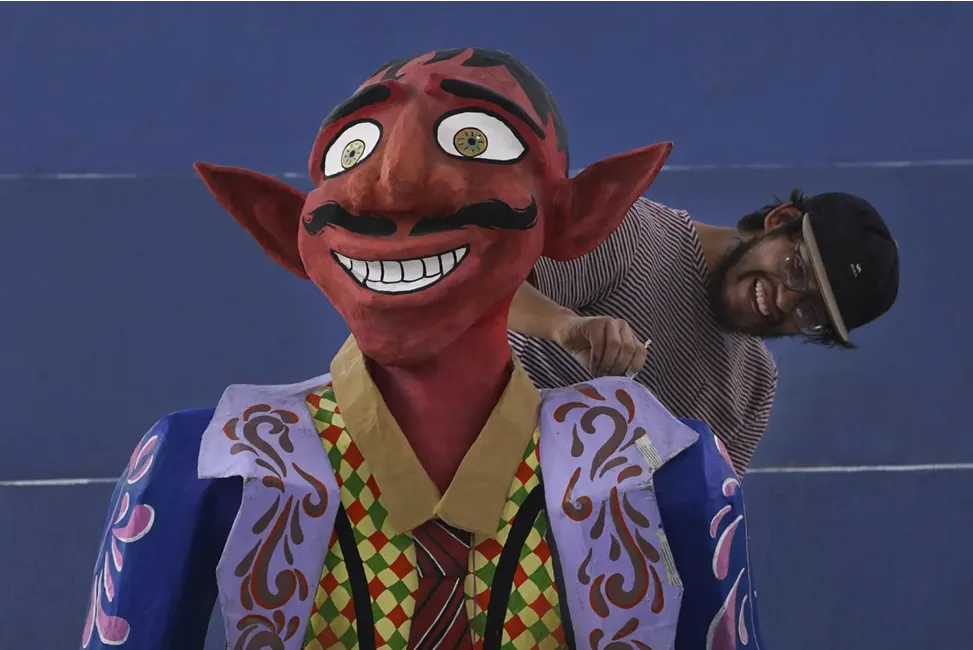
Many Mexicans, however, have gone a step further. In a country where it is common to mock or laugh at the evils that afflict them, some Judases look like little devils and others are caricatured political leaders.
“They are a parody of the social idea of evil,” says Domínguez. “In the burning of Judas, social evil becomes laughable.”
Executing justice for bad rulers (at least with rockets and cardboard) would be impossible without the artisans who bring the puppets to life after years of experience in modeling paper and applying multi-colored paint.
Marcela Villarreal, 50, has been working as a “cartonera” for a decade and this year she joined several colleagues to make the figures that will burn in the Santa María la Ribera neighborhood in the Mexican capital.
Although the burning takes place on Holy Saturday, Marcela and other members of the Cartoneros de la Ciudad de México organization have been leading a festival since Thursday to exhibit and sell their work. The agenda included workshops, conferences, raffles and dances.
Marcela explains that the tradition of cartonería began in Mexico with Pedro Linares, an artist who went down in history for his alebrijes, paper mache figures that are painted with bright colors and represent animals or imaginary figures.
According to this Mexican cartonera, modeling Judas that do not resemble the biblical character but contemporary rulers implies that the burning represents that which has great weight in the collective culture.
“They are burned as a representation of that which people are reproaching them for,” she says. “They light them and it is like giving vent to your discontent of the moment.”
For this, she explains, they have a “master rocketeer,” that is, a man specialized in lighting the rockets that will destroy the Judas. Their role is key during the celebrations to avoid uncontrolled fires or explosions that put participants at risk.
Marcela and her colleagues took more than two months to make 12 Judas for the event in Santa María la Ribera. Of these, only five were destined for burning and the rest will be exhibited in a museum.
Inside each figure, there is a skeleton made of reeds, a material made from dried palm leaves and wet to adjust the shape. The reeds are tied with an adhesive thread and, once the frame is ready, it is covered with newspaper and kraft paper, a kind of cardboard.
The material is held together with paste, a mixture of flour and water that is heated and then left to cool. The final step is to paint the Judas and wait for it to dry.
The great protagonist of the Santa María la Ribera celebration was a Judas that measures more than three meters and whose body exhibits masks that represent the seven deadly sins. That puppet was lucky enough to escape the rockets and will end its days in a museum.
Cartoneros from Mexico City led the event in this neighborhood for the sixth consecutive year and Marcela says she has enjoyed each one of them. What she likes most about the burning of Judas, she says, is that so many Mexicans come together to enjoy the event and make their legacy known.
“It is a spectacle to see how the Judas are lit, to see the emotion of the people,” she says. “The most gratifying thing for us is to see this work that is part of a tradition from a union of people who sometimes don’t know it exists.”

MARÍA TERESA HERNÁNDEZ
Hernández is a reporter on the AP’s Global Religion team. She is based in Mexico City and covers Latin America.
Another article that goes into more depth of the political ramifications:
https://mexiconewsdaily.com/mexico-living/holy-week-burning-judas-tradition/
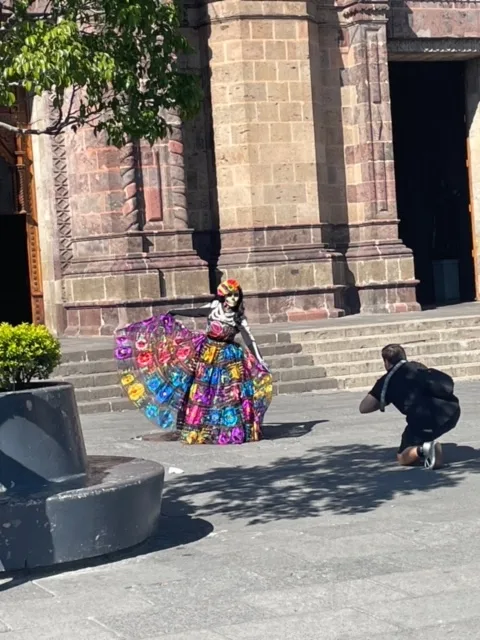
Judas girlfriend is a Tik Tok influencer in case you were wondering.
Then there are the bulls. The bulls are part of the ritual. The bull itself does not burn - all the fireworks are in the brightly colored parts in the back: Common effects are whistle or BP spin stablized rocket motors called “buscapies” which take off in random directions from the structure attached to the bull from behind.. People gather around the bull and depending on how tired of living they are either get closer or run away (see youtube links below).
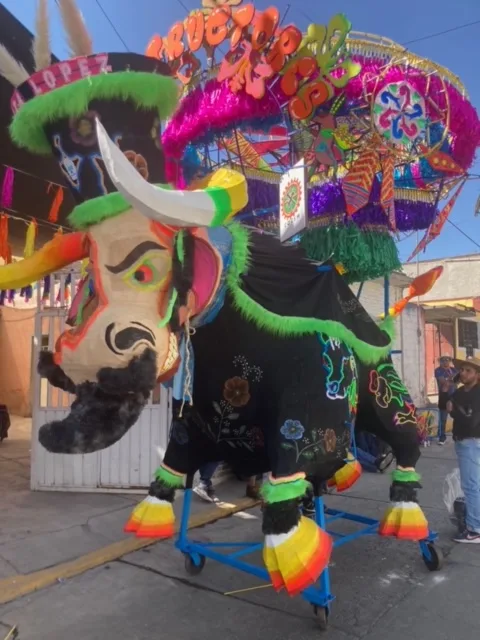
“Once a year, the town of Tultepec, Mexico, turns into a wild celebration of lights, colors, explosions and revelry. Every March, the city launches the National Pyrotechnic Festival. The festival lasts nine days and culminates with the largest celebration of all, the "Burning of the Bulls." At the the event, which commemorates the feast of John of God (the patron saint of firework makers), locals build enormous bull-shaped floats out of papier mâché. The floats are completely covered with decorations and fireworks, which are then ignited during a fiery parade through the city.”
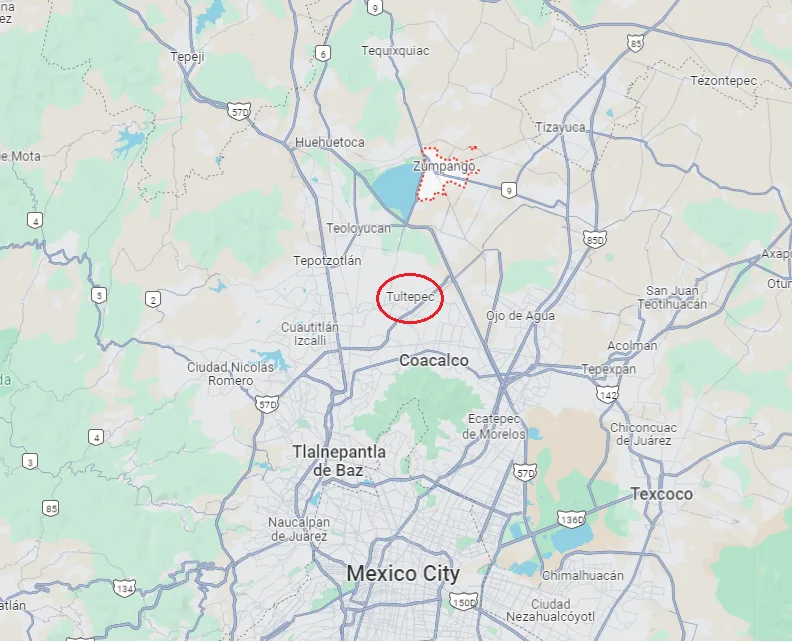
At this point its probably a good idea to show where Tultapec is in relationship to Mexico city and Zumpango, which is where most of the Judas activity takes place. To give you an idea as to scale, Tultepec is about 20 miles from the center and Zumpango another 10 miles.
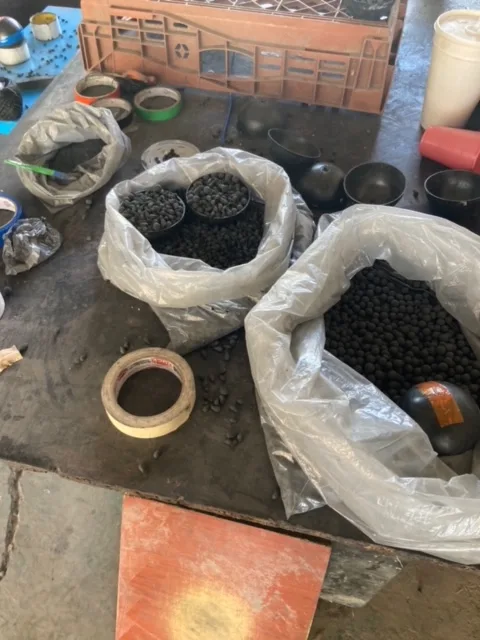
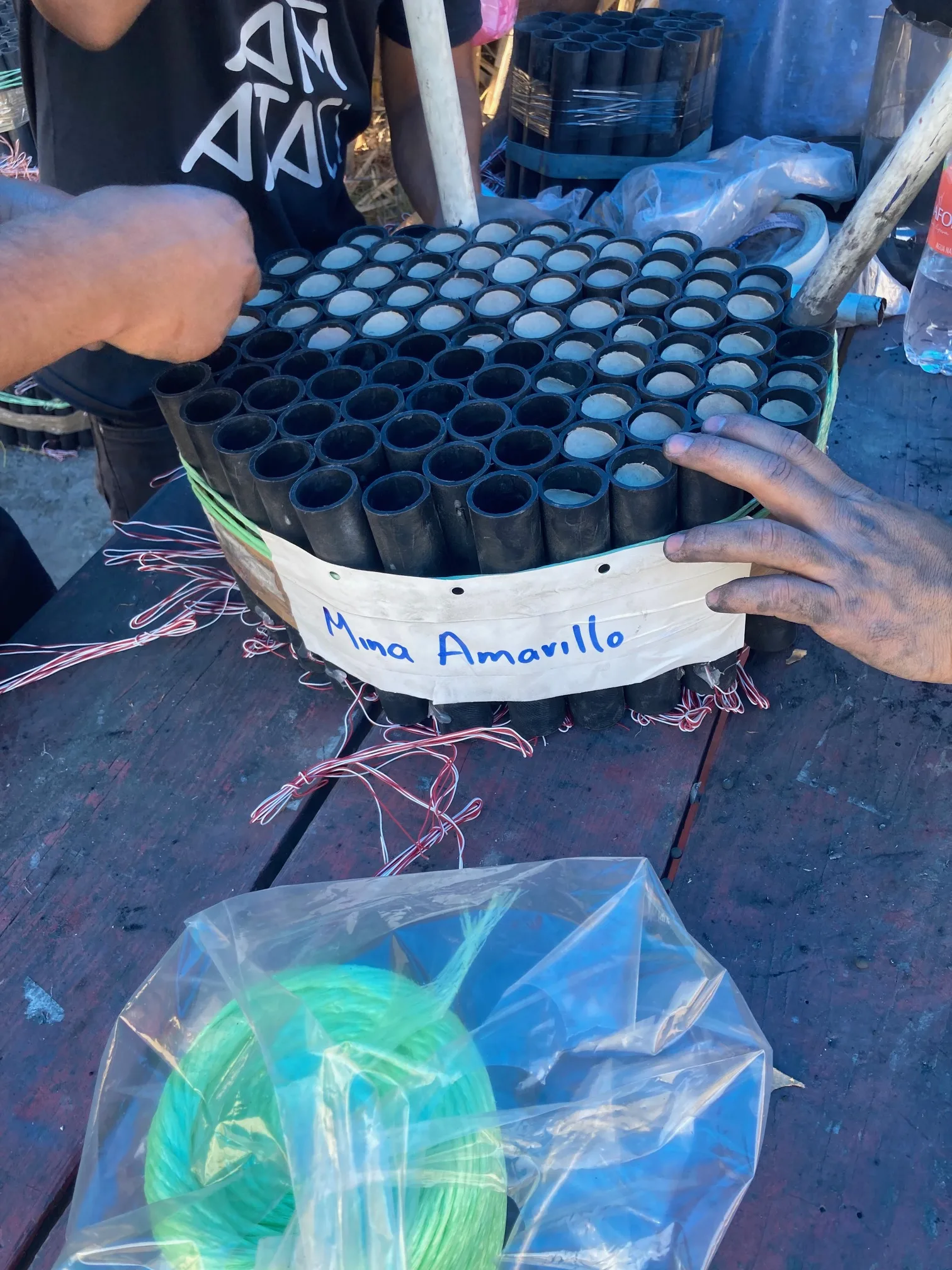
BP Drying, Stars, Amarillo comets, 4” wrapped shells - Could be Tultapec, Malta, or Hawthorne NV, though I have not seen any raisin shaped stars before. Juan said he saw people rolling stars using a tarp so this may be a product of that.
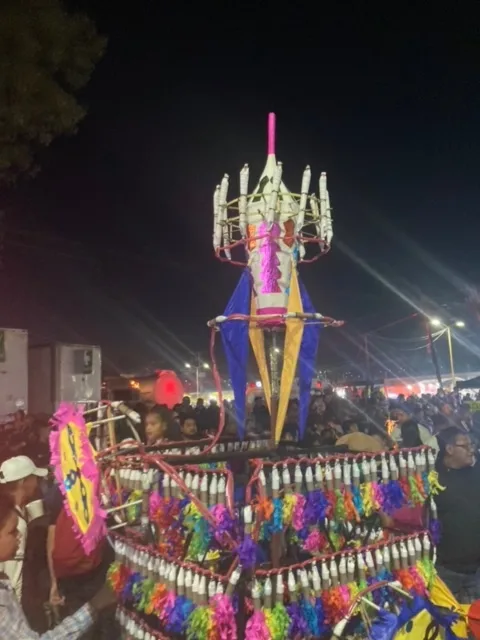
Girandolas with the added kicker of “buscapies” (the brightly colored objects under the corona) to further inflame the onlookers
Now lets talk about Zumpango which is where Judas is still king. As in more Judas, less bulls compared to Tultapec.
Juan said that due to government pressure the Judas phenomenon was toned down in other parts of mexico but still allowed in Zumpango. Zumpango is just 5 or 10 miles up the road from Tultapec so they can still draw on all the artisans that live there.
From La Jornada:
“
Zumpango, Mexico. Here the tradition is still alive and this day was no exception when dozens of monumental figures made of cardboard, reeds and wood and covered with fireworks personifying Judas were burned in San Pedro La Laguna in Zumpango.
The imagination of the pyrotechnicians knew no bounds and they created ingenious images to participate in the Burning of Judas, with characters such as: El Charro negro, La mamá luchona, El Diablito, El Pato Lucas, Bar Simpson, La Sirenita and various alebrijes; all of them diabolical.
For their elaboration, the pyrotechnic artisans took more than 15 days so that this Sunday they were burned in the Las Buzas sports center in San Pedro La Laguna, one of the towns with a fireworks tradition in the state of Mexico, located next to La Laguna de Zumpango.
From midday, hundreds of families came to admire first the construction of the monumental towers with the Judas figures on top and then the traditional burning.
Although tradition dictates that the burning takes place on Holy Saturday of Holy Week, here it takes place on a Sunday because many firecracker families go to different parts of the country to participate in the week's festivities.
In the afternoon, the Burning of Judas began before thousands of spectators who joyfully cheered each of the explosions.
"We came to burn the bad vibes, to burn the bad things of the year and welcome another year full of good things and harmony," said some of the visitors.
Ángel David Ramos Sánchez was one of the competing pyrotechnicians and who, together with his family, participated with four figures of Judas.
“We are a family and we bring four Judases, the first is the devil of the lottery, the second is the fighting mother because when mom gets angry the devil comes out and throws the slipper at us; the third is a satanic ritual that they do and the fourth is the cartoon of Daffy Duck, in the episode where he appears with his little match and says this is the last act and it can only be done once in a lifetime.”
“It takes us 10 to 15 days to make them and they are made from reeds and paints. For us it is a beautiful tradition and to continue with the tradition of our town, we are already the fifth generation and a year ago we had to get first place together, but this time we came individually. The nice thing is that traditions are family traditions and it is nice to see that many of the contestants are over 18 years old, but they do not let traditions fall and just as I am happy to continue with the traditions that our ancestors left us, the generations that come after me continue with these beautiful traditions,” he said.
Eduardo Zamora Sánchez is another of the pyrotechnicians of the company Juegos Artificiales Andrés Zamora, who participated with the Judas titled "Long Live the King of Lies" to criticize the lies of people in the world and whose elaboration took two weeks, based on cardboard, paper and wood and cotton gauze and paint.
“Our Judas means a relief to be well this year and a satisfaction to take out our figure to participate in our tradition of our town. This is our first year that we participate because we are a new generation and we hope that we continue participating,” he said.
Javier Salinas Cesáreo, corresponsal La Journada
31 de marzo de 2024 16:09
I asked Juan about the meaning of “Alebrijes” since google translate hadn’t heard of it either. He said::
“They are mythical animals usually very colorful. The Tultepec Judas competition is mostly based on alebrije, some can be stunning. If you have been to any part of Mexico you have seen them they are now made in forms of cheap trinkets like keychains to expensive collectible pieces. They say that this paper macher from Mexico had feverish dreams and he saw those so he started making them. Anyway they can be stunning.!”
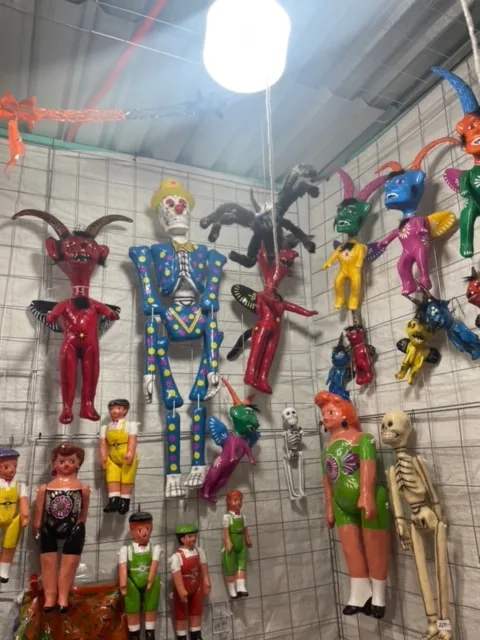
Moving on to Guadalajara where "Day of the Dead" is in full swing with skeletons big and small. And dolls (do they explode?) Juan overlooking his kingdom from the hotel balcony..
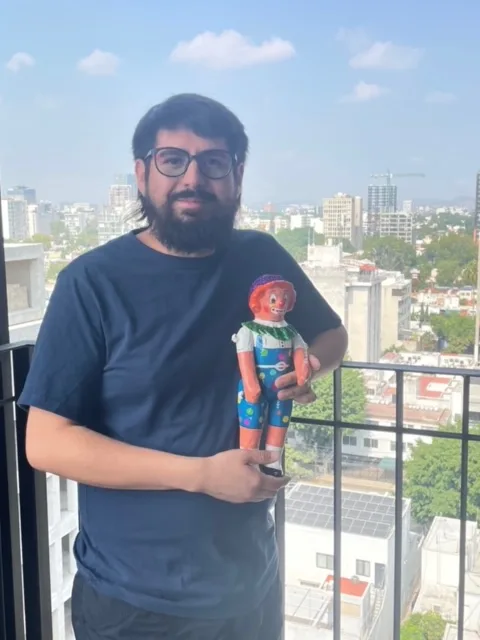
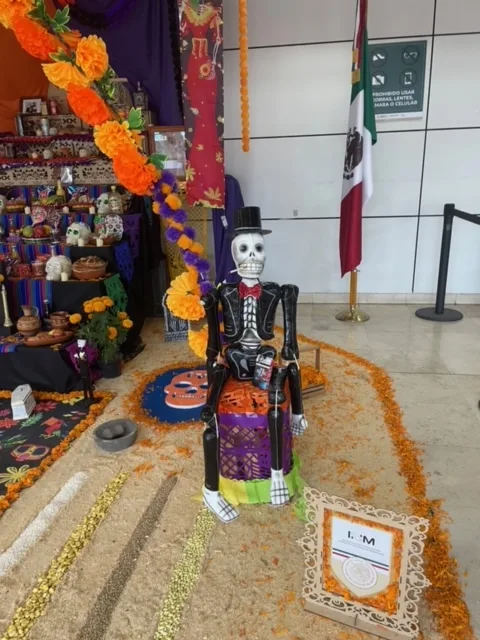
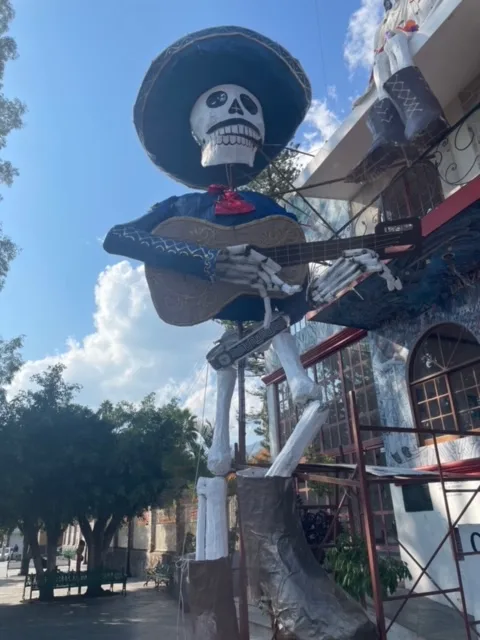
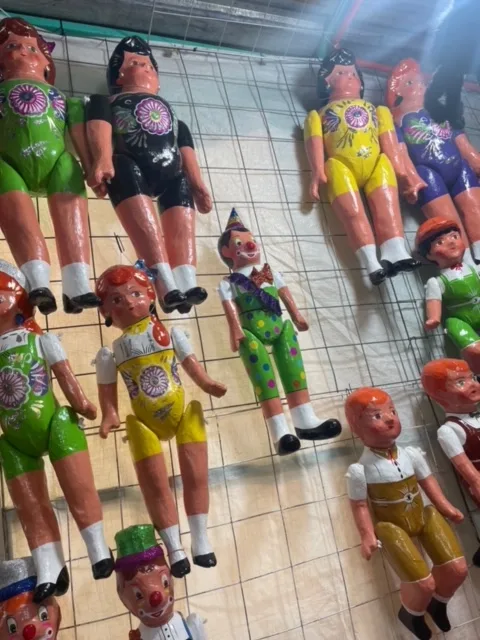
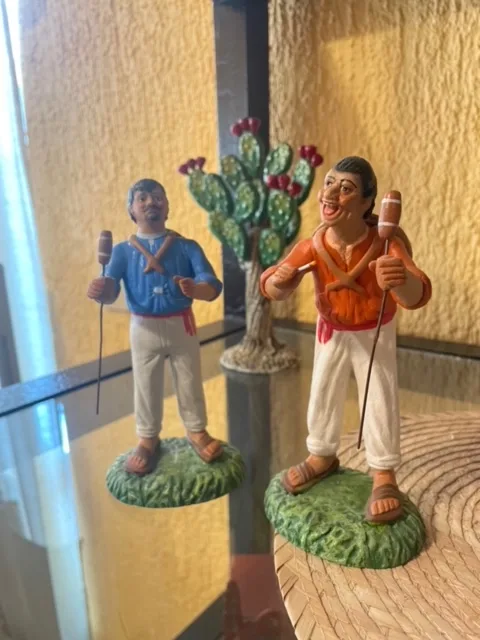
Campesinos lighting rockets in their hand with a cigar or cigarette. These were in a museum in Guadaljara
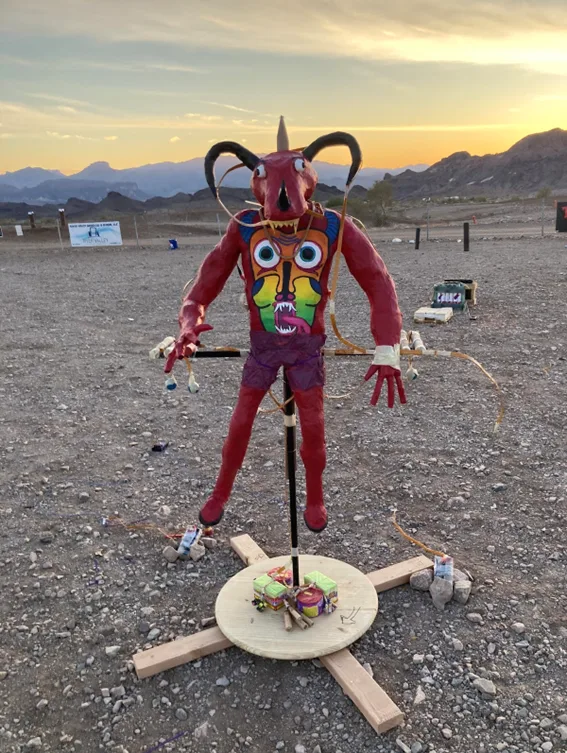
And then back to the states, where Juan got the bright idea of trying to do his own Judas at Do-it 2023. First one was a big success check it out:
Second attempt (Havasu 2024) was not as successful but nice piece of work on the paper mache in any case
JUDAS (from Jesus Christ Superstar)
Now if I help you, it matters that you see
These sordid kinda things are coming hard to me.
It's taken me some time to work out what to do.
I weighed the whole thing out before I came to you.
I have no thought at all about my own reward.
I really didn't come here of my own accord.
Just don't say I'm ...
Damned for all time.
I came because I had to; I'm the one who saw.
Jesus can't control it like he did before.
And furthermore I know that Jesus thinks so too.
Jesus wouldn't mind that I was here with you.
I have no thought at all about my own reward.
I really didn't come here of my own accord.
Just don't say I'm ...
Damned for all time.
Annas, you're a friend, a worldly man and wise.
Caiaphas, my friend, I know you sympathise.
Why are we the prophets? Why are we the ones
Who see the sad solution - know what must be done?
I have no thought at all about my own reward.
I really didn't come here of my own accord.
Just don't say I'm
Damned for all time.
In which intrepid WPA member Juan Galvan visits the fireworks celebrations in Tultapec, Guadalajara and Zumpango and makes attempts to get the Judas spirit going right here in the USA.