
Not extreme enough if you ask me
Some Do-its ago one of our members, an approximately 7 foot tall hispanic former marine appeared at Do-it. He said his name was "Arbor - just call me Tree".
That's not him in the picture, I didn't have a photo of him so I had to hire an exotic fashion model at great expense to pose with some rockets, which for all I know don't even whistle. Tree if you're out there, send me a picture.
Very friendly chap, off he went and knocked out some whistle rockets in manufacturing. What was unusual or "extreme" about these rockets is that they were able to lift 8 inch headings to great height. But the heading did not go off at apogee, noooooooooo.
Came back down and went off at maybe 300ft? Very exciting, good effect, what pyrospectaculars used to call "High def" meaning the shell was "low altitude" so it was more in your face.
How is he able to do that, I got to give it a try. But I didn't have a press and I didn't dare pound them out with a dead blow hammer like they do in Mexico. I was more into building cylinder shells in those days anyway, but finally a Carver lab press fell into my hands for next to nothing. I was able to modify it into a car battery powered rocket press with a hydraulic pump acquired from craigslist. This was cool because I could put down the tailgate of my truck and have a mobile rocket operation.
I had some rocket tools I had bought at PGI which were on the shelf until the acquisition of the Carver press and the hydraulic pump, so I dusted those off at Do-it and gave it a try using the Ben Smith (from Firesmith) formula, that is to say 64/32/2.
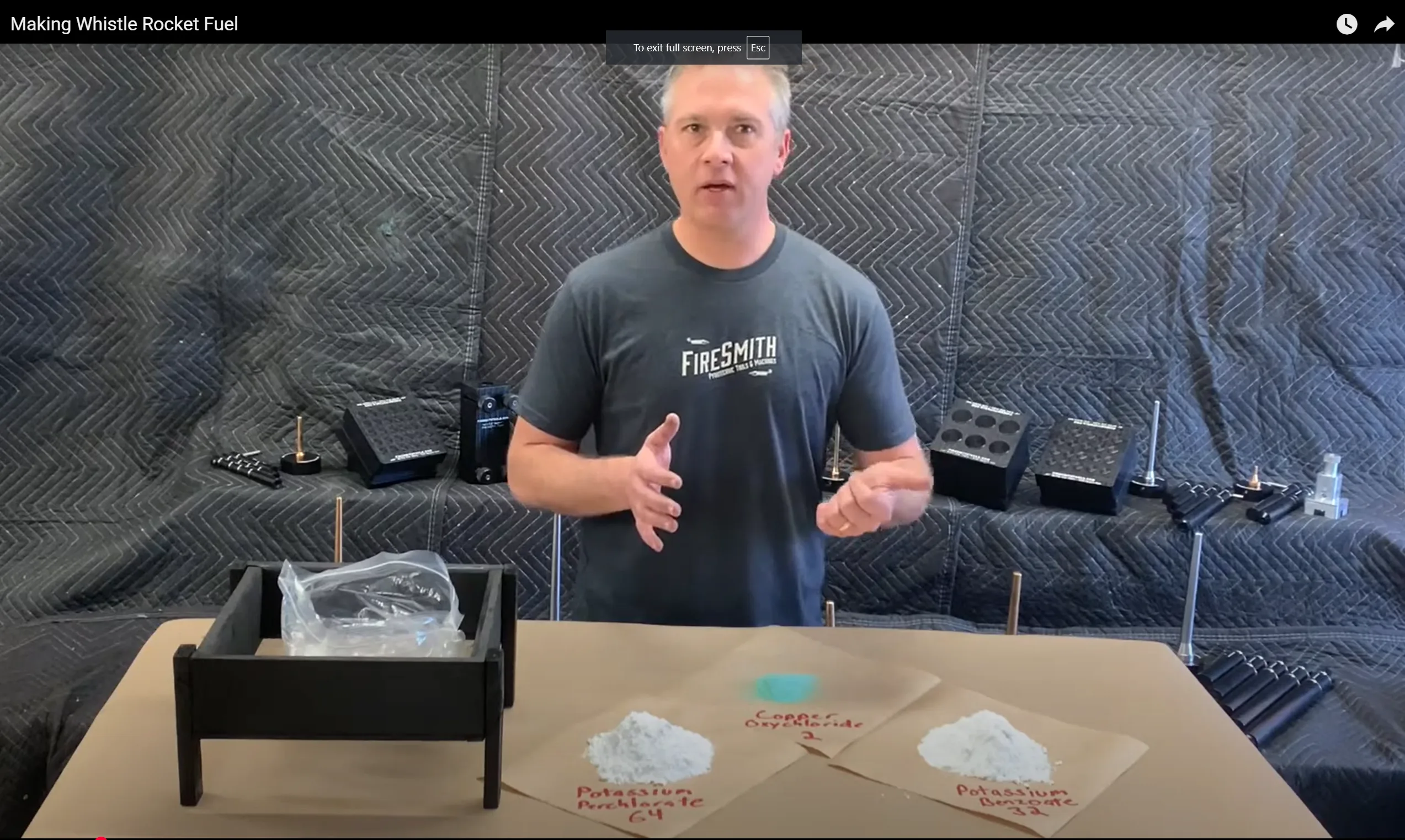
Now mind you, these tools I had purchased at PGI were not Firesmith but I thought I would start with the Ben Smith formula and see what happened. And what happened was caca, I could get them to fly, barely, but they couldn't even lift a 3 inch heading.
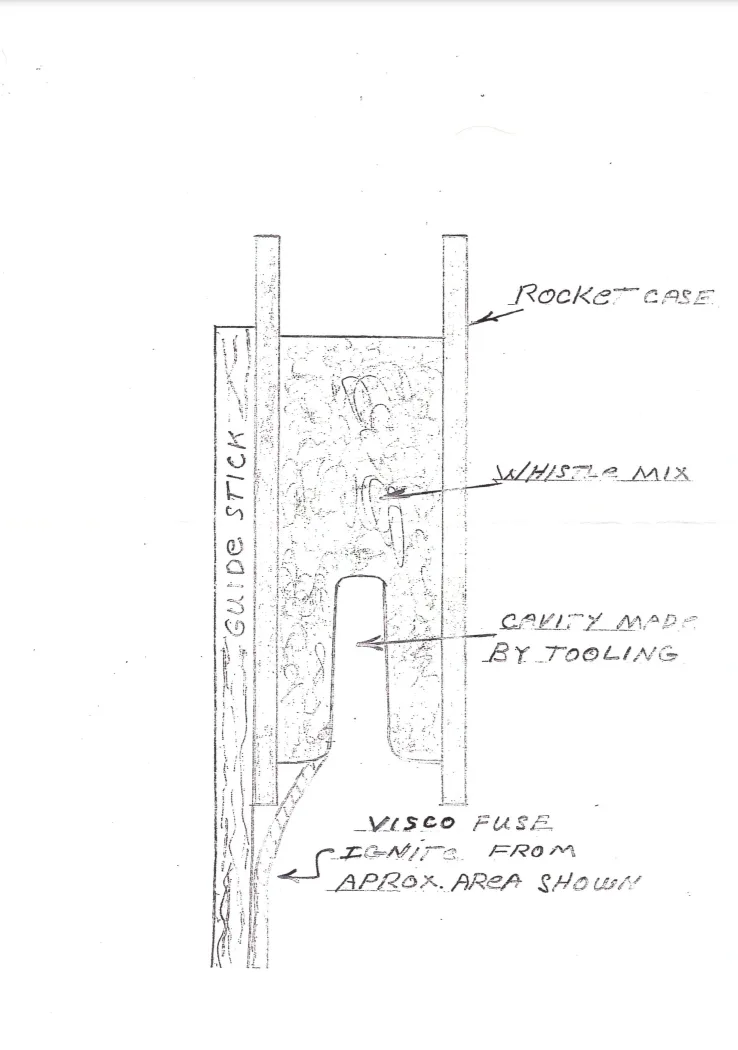
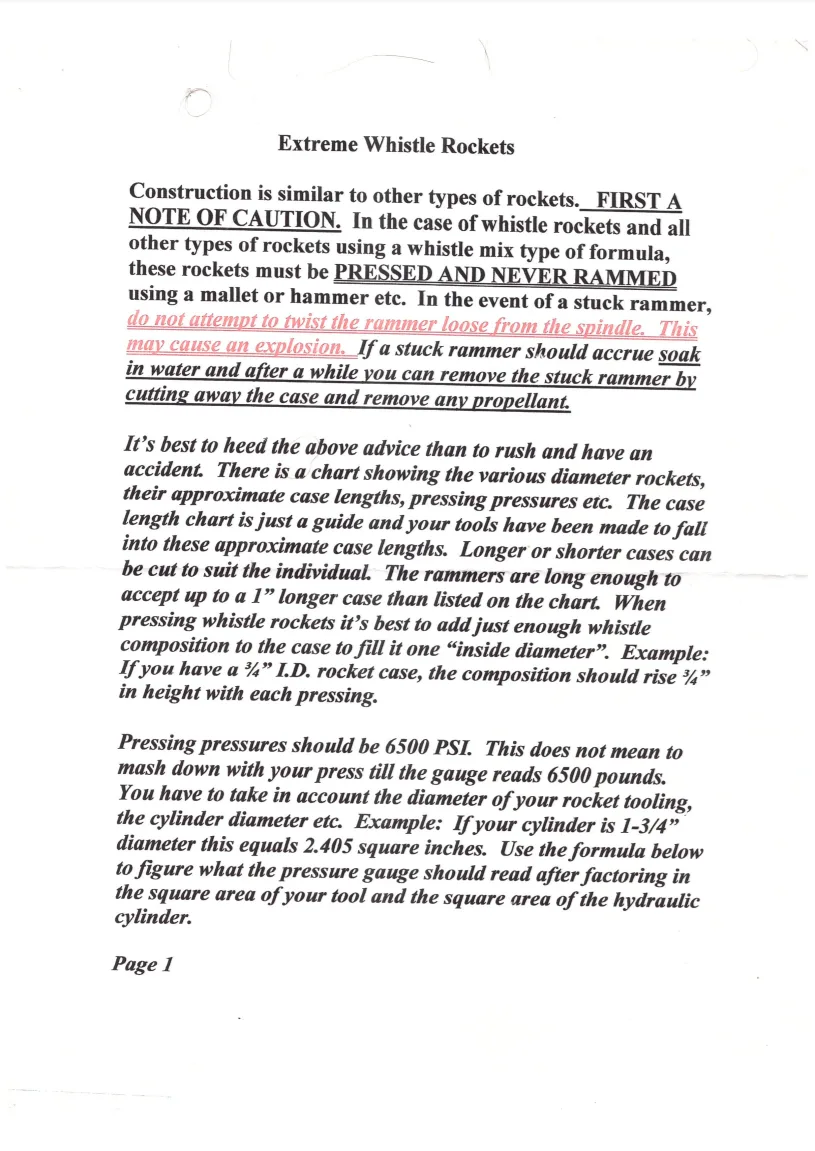
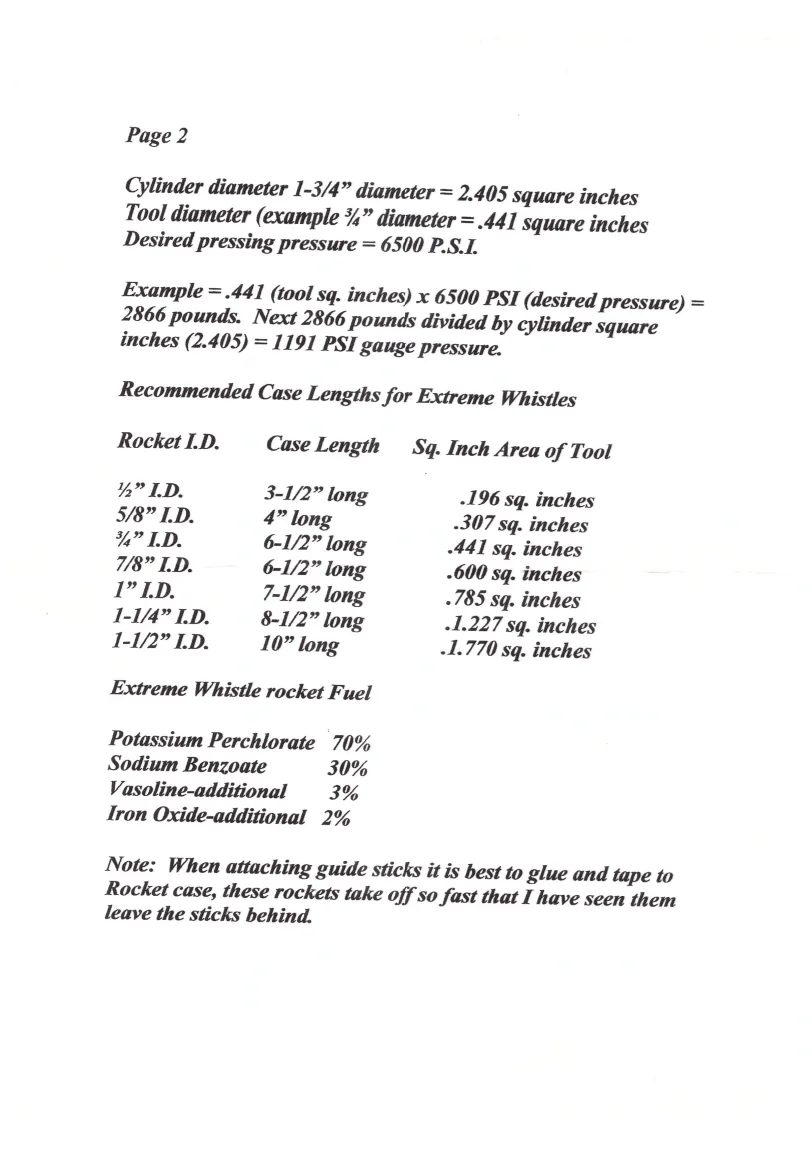
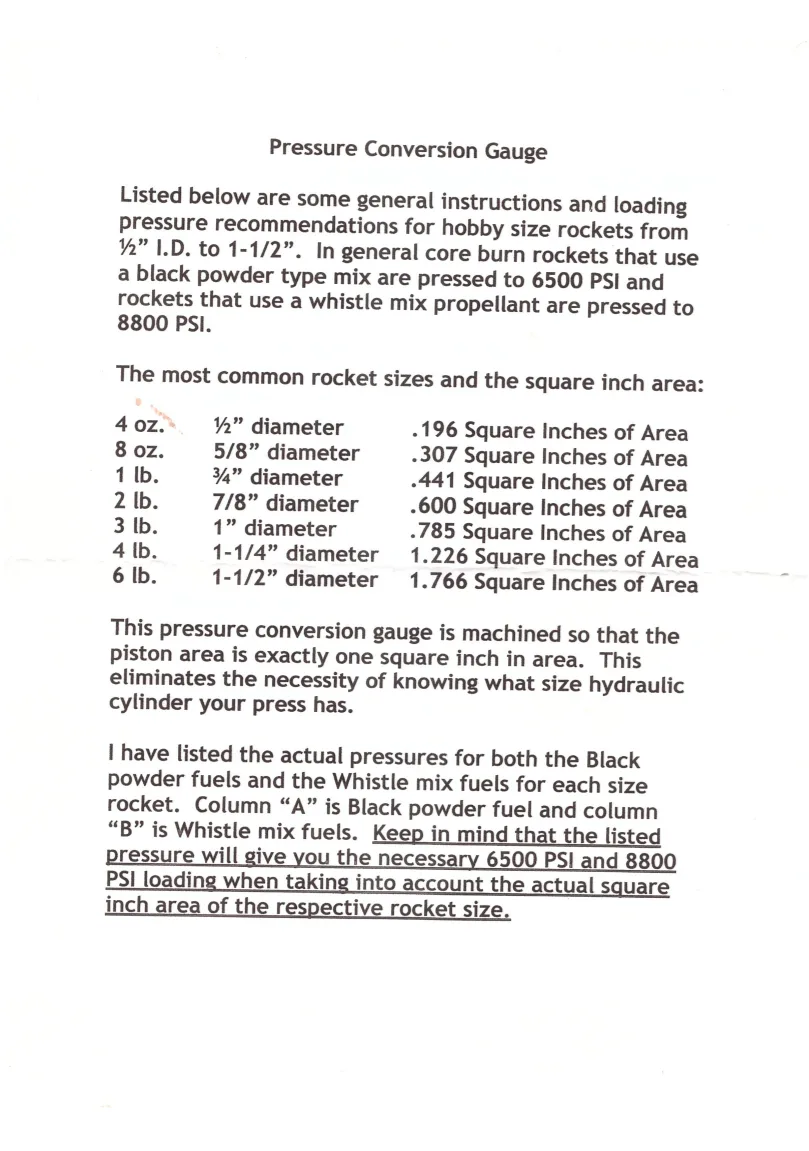
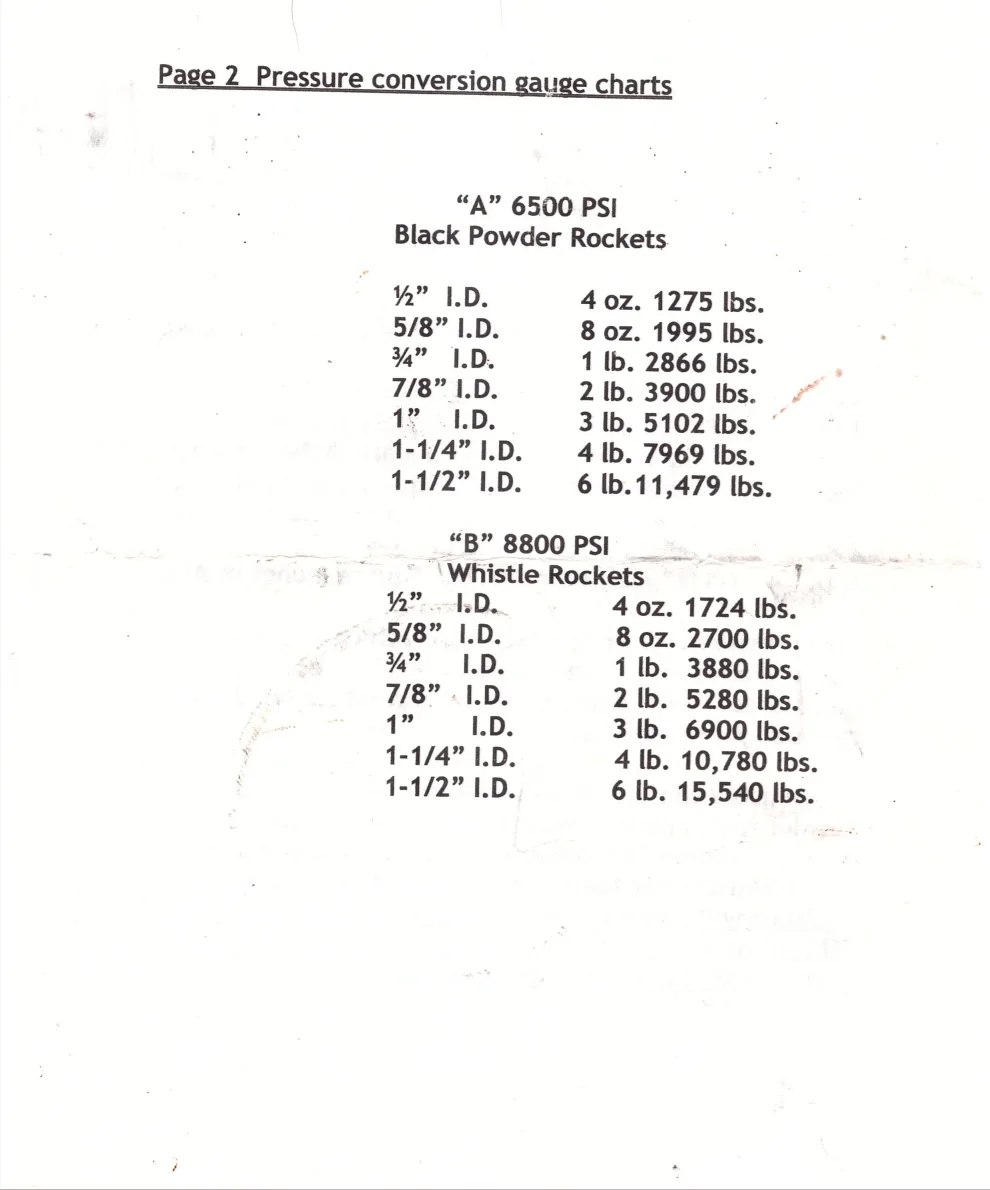
The handout that came with the tools I bought:
So I went away, licking my wounds (tasted like perchlorate) made some shells instead whilst thinking about what to try next.
I believe one problem with what I did with the first batch was that the material was not mixed well enough. Everything was ball milled well, but an experienced whistler suggested I push the de-sensitized material through a finer screen like 40 mesh several times with the help of a 3" wide paint brush whose bristles had been cut down to about 1/4". Rather than pushing it through 20 mesh window screen with a delrin scraper. Anyone who has worked with whistle material knows this part is something of a pain because the benzoate has a mind of its own.
One of the video links down at the end shows a man mixing whistle using a kitchen strainer with the usual 20 mesh so maybe its just a matter of running it through the screen more times to get it consolidated. Or spending more time in the mixing phase with the solvent.
The other issue was the formula itself. Ben Smith had advocated 64/32/2 yet the tools I purchased suggested 70/30/1. Yes I know they don't add up to 100, this is pyro, if you want advanced math try Hahvahd, I'm just the messenger.
My friend the whistler suggested trying the more oxider heavy "extreme" formula recommended by the tooling in addition to the finer mesh screening.
If one were to apply "logic" or the "scientific method" one would change one variable at a time. But that's not how we roll around here, we need results god dammit, so I decided to go for the big enchilada.
Result was that the first few rockets blew up. But wait, what about lighting the nozzle as shown in the picture, or as my friend the whistle man suggested, winding the visco around the bottom of the nozzle half a turn. Well that worked, and I was able at least to lift a 4" canister heading!
But I don't think it has the snort to lift an 8". Maybe the next step is to do some static engine tests as shown in the final video link and work out the issues that way first. Plan B, talk to Tree.